
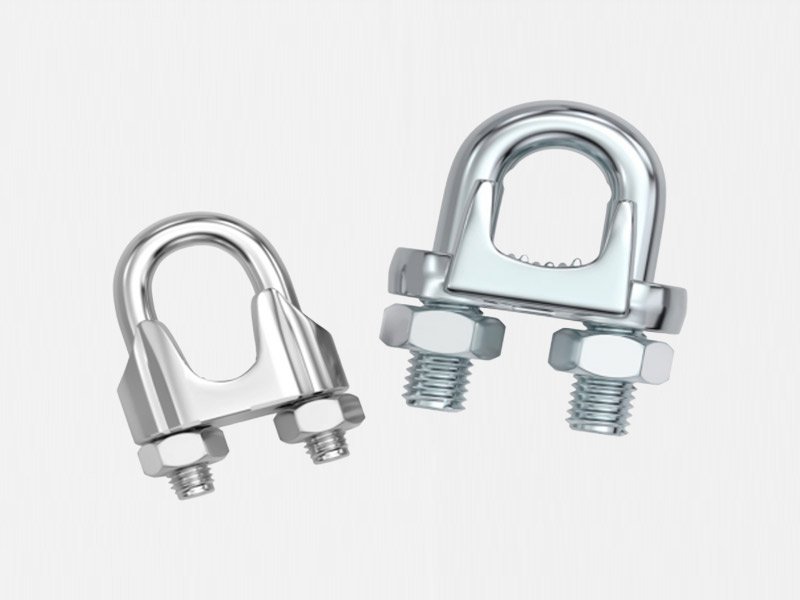
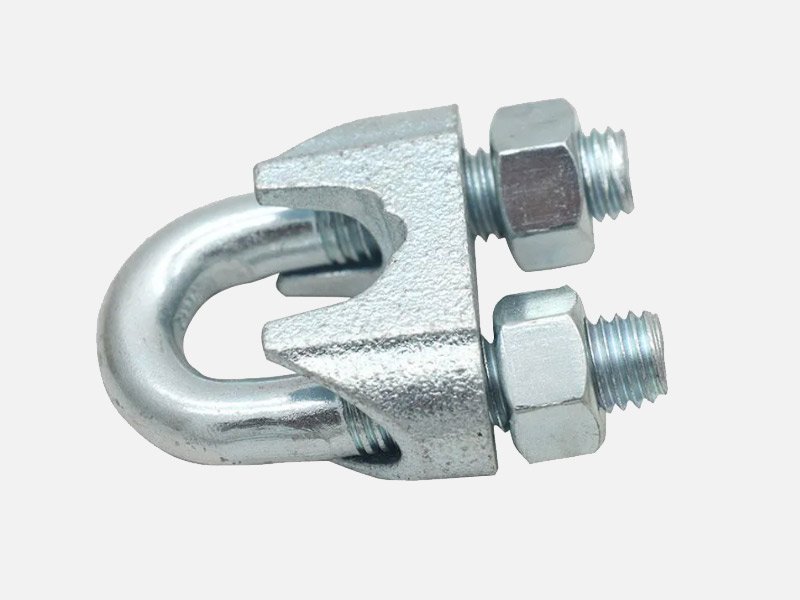
Wire Rope Chuck
Material : Q235 high-quality carbon steel
Specifications : M6-M40
Testing Standards : Locking force, dimensional tolerances, and hardness all meet the requirements of national standard GB/T 5976
Function: A cleat used for the temporary splicing of wire ropes and for securing the trailing end of a wire rope when it is threaded through a block and tackle
Products Description
Wire rope chucks are general-purpose rigging components used to secure the ends of wire ropes and lock rope loops or sleeves in place. They secure the rope ends and transfer load by clamping the wire rope through compression, and are commonly used in lifting, guying, lashing and hoisting applications.
Structural Composition
The mainstream forged version consists of a U-bolt, a base plate and two tightening nuts; the curved surface of the U-bolt conforms to the wire rope, whilst the base plate supports the rope body. Tightening the nuts secures the rope in place.
Principle of Operation
By tightening the nuts at both ends, the U-bolt presses down on the wire rope, generating significant static friction between the rope and the base, thereby preventing the wire rope from slipping and securing the rope loop or end. When used in conjunction with a heart-shaped sleeve, this prevents the rope from kinking or deforming and enhances load-bearing stability.
Product Details
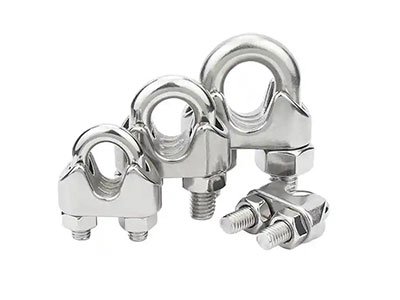
Specifications and Standards
Strict control over production standards ensures that tolerances are kept within acceptable limits, resulting in even load distribution, high hardness and resistance to deformation.
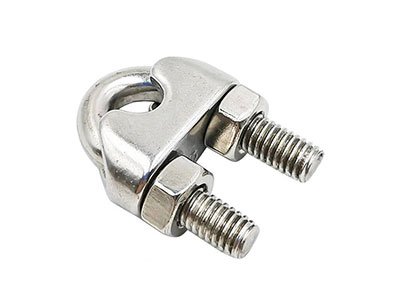
Deep Threads
With a smooth surface and deep threads, the sharp thread flanks ensure even load distribution and prevent slippage during rotation.
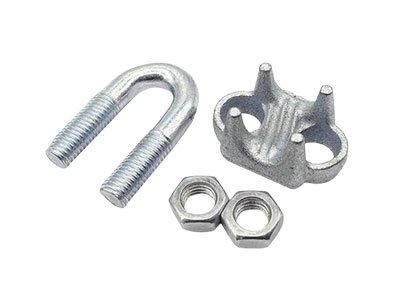
Carefully Selected Materials
Materials are rigorously selected through a multi-stage screening process; each batch is hand-selected on-site to ensure quality control from the source, followed by meticulous forging.
Installation Guidelines
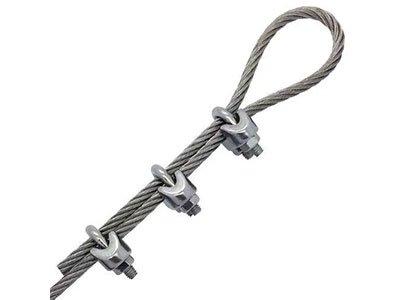
- The larger the rope diameter, the more ropes required; as a general rule, at least three should be arranged side by side, with a spacing of at least six times the diameter of the steel wire rope;
- The U-bolts should be positioned on the side with the shortened rope ends, with the main rope resting against the base to prevent it from being crushed or broken;
- Check the tightness of the nuts regularly; they are prone to loosening under vibrating conditions and must be retightened.
Securing lifting eyes, anchoring guy wires for electricity pylons, lashing down cargo, securing wire ropes to fencing, and making rope loops for simple lifting slings, etc.