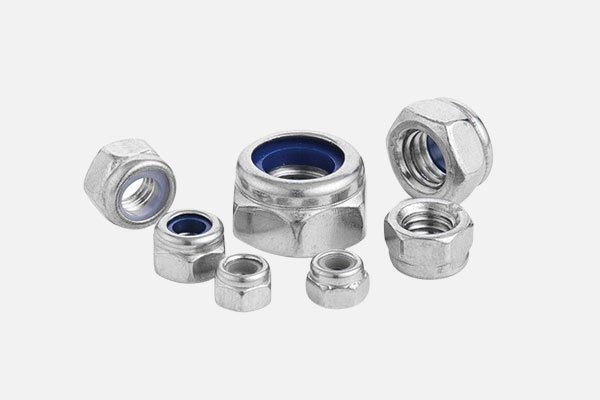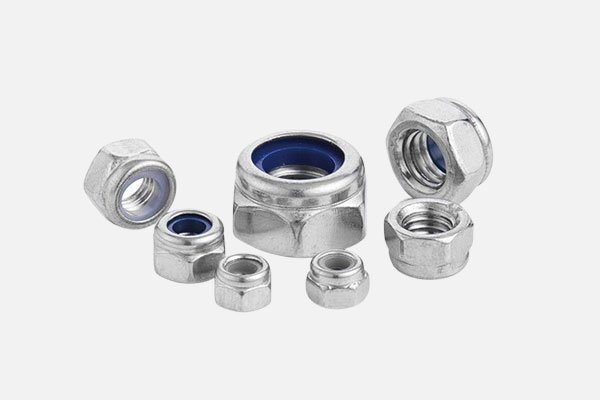
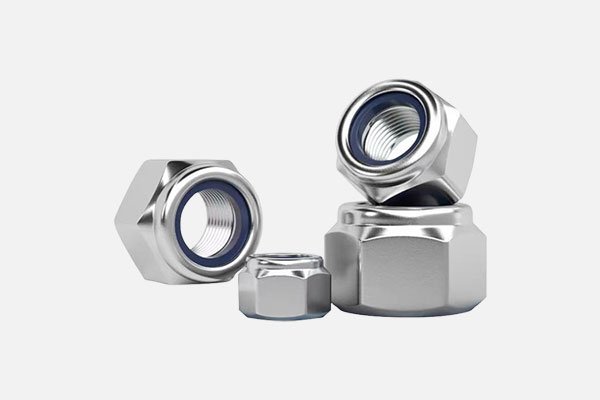
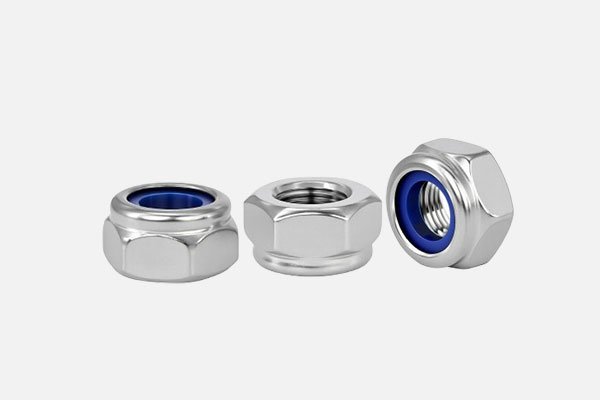
Grade 8 Nylon Lock Nuts
Performance parameters: Minimum tensile strength ≥ 800 MPa, guaranteed load ≥ 600 MPa
Operating temperature range: -50 °C to +120 °C (PA66 nylon rings); can withstand 150 °C for short periods
Thread Specifications: M6-M8, M10-M16, M18-M24(standard stock, all compliant with DIN 985)
Product Description
Grade 8 nylon anti-loosening nuts, also known as self-locking nuts, are fasteners that combine the high load-bearing capacity of Grade 8 steel with the elastic anti-loosening properties of nylon. Their core structure consists of a metal nut body with an embedded PA66 nylon ring; anti-loosening is achieved through a threaded interference fit. Designed to be used with Grade 8.8 high-strength bolts, they are widely employed in applications subject to vibration, impact and alternating loads, and represent a key anti-loosening solution for industrial equipment, replacing standard nuts.
Principle of anti-loosening
- The nylon insert forms an interference fit with the bolt threads (standard interference of approximately 0.5 mm for Grade 8 bolts).
- As the bolt is screwed in, the nylon undergoes elastic deformation, generating a sustained radial compressive force that fills the gaps between the threads.
- This creates a stable frictional torque that resists loosening caused by vibration and impact; the anti-loosening reliability is 3–5 times higher than that of ordinary nuts.
Installation Guidelines
|
Procedure |
Technical Requirements |
Risk Warnings |
|
Thread Cleaning |
Free of burrs, metal shavings and oil |
Contaminants may scratch the nylon ring, compromising its anti-loosening performance |
|
Pre-tightening Method |
Screw in manually by 3–5 threads before using a tool |
To avoid damage to the nylon ring caused by uneven stress distribution |
|
Torque Control |
Tighten evenly in 2–3 stages according to the standard torque value (e.g. M12: 68 N·m) |
Overtightening may crush the nylon ring; under-tightening may result in insufficient preload |
|
Tool Selection |
Torque wrench (accuracy ±3%); impact wrenches must not be used |
Impact loads may instantly destroy the structure of the nylon ring |
|
Exposed Bolt |
After tightening the nut, 2–3 threads of the bolt end should remain exposed |
This ensures the nylon ring fully envelops the thread, guaranteeing anti-loosening performance |
Applications
Thanks to their combination of high strength and reliable anti-loosening properties, Grade 8 nylon anti-loosening nuts have become standard fittings in the following sectors
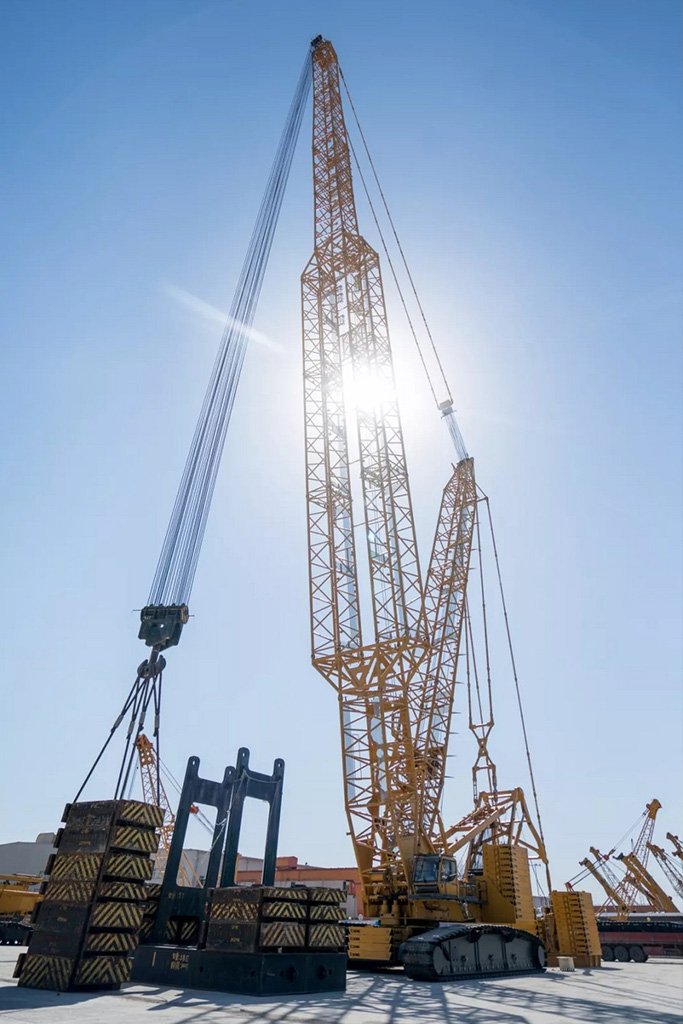
Construction machinery
Connections in the undercarriage, chassis and hydraulic systems of excavators, cranes and loaders, which are subjected to prolonged vibration and impact.
New Energy Equipment
Wind turbine towers, solar panel mounts and energy storage equipment, meeting the dual demands of outdoor environments and vibrating operating conditions.
Rail Transport
Bogies and braking systems in metro and high-speed rail vehicles, ensuring operational safety.
Automotive industry
Gearboxes, engines and chassis suspension systems, replacing standard nuts to prevent loosening caused by vibration during driving.
Petrochemical Piping
Flanged connections in medium- and low-pressure pipelines, providing anti-loosening protection whilst accommodating thermal expansion and contraction caused by temperature fluctuations.
General Machinery
Compressors, pump housings and motor bases, extending maintenance intervals and reducing the risk of downtime.
Contraindications for Use
- Do not reuse: If the assembly is disassembled and reassembled more than twice, the nut must be replaced, as the nylon ring will suffer permanent loss of elasticity.
- Avoid excessive lubrication: Applying oil to the threads will result in a loss of approximately 60% of the clamping force, affecting the anti-loosening performance.
- Correct orientation: The end of the nylon ring must face the component being connected or the washer; do not fit it the wrong way round.
- Material compatibility: Hot-dip galvanised bolts must be used with nuts produced using the same process to avoid poor fit caused by differences in coating thickness.
- Temperature limits: The long-term operating temperature must not exceed 120°C; otherwise, the nylon ring will soften and fail.
Grade 8 nylon lock nuts are the ideal choice for high-strength applications requiring anti-loosening protection. Through a combined design featuring a PA66 nylon ring and a metal nut, they ensure a tensile strength of 800 MPa whilst providing long-lasting and reliable anti-loosening performance. With their ease of installation and low maintenance costs, they have become an indispensable key fastener in modern industrial equipment.