

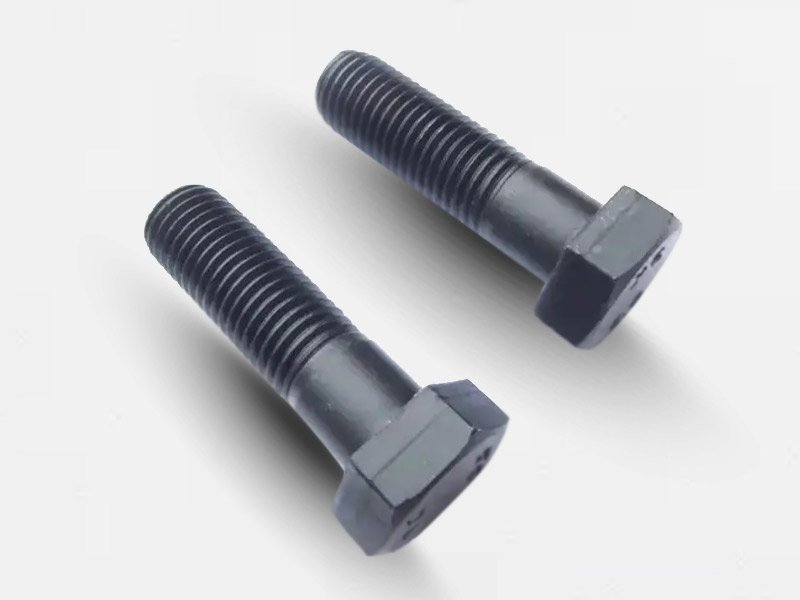
10.9 hexagonal bolt
Material : Alloy steel Strength Grade: 10.9 Surface
Material : Alloy Steel
Strength Grade : 10.9
Surface Treatment : Electro-galvanized/Hot-dip Galvanized
Thread Specifications : M12, M16, M20, M22, M24 (Regular stock available)
Standards : DIN933 (German Standard), GB5783 (Chinese Standard)
Product description
- 10: Indicates that the minimum tensile strength of the bolt after heat treatment is ≥1000 MPa (actual national standard requirement: ≥1040 MPa)
- .9: Indicates a yield-to-tensile ratio of 0.9 (yield strength / tensile strength); theoretical yield strength = 1000 × 0.9 = 900 MPa (actual national standard requirement: ≥940 MPa)
- S designation: Grade 10.9S, specifically for steel structures, emphasising higher consistency and reliability; suitable for friction-type connections
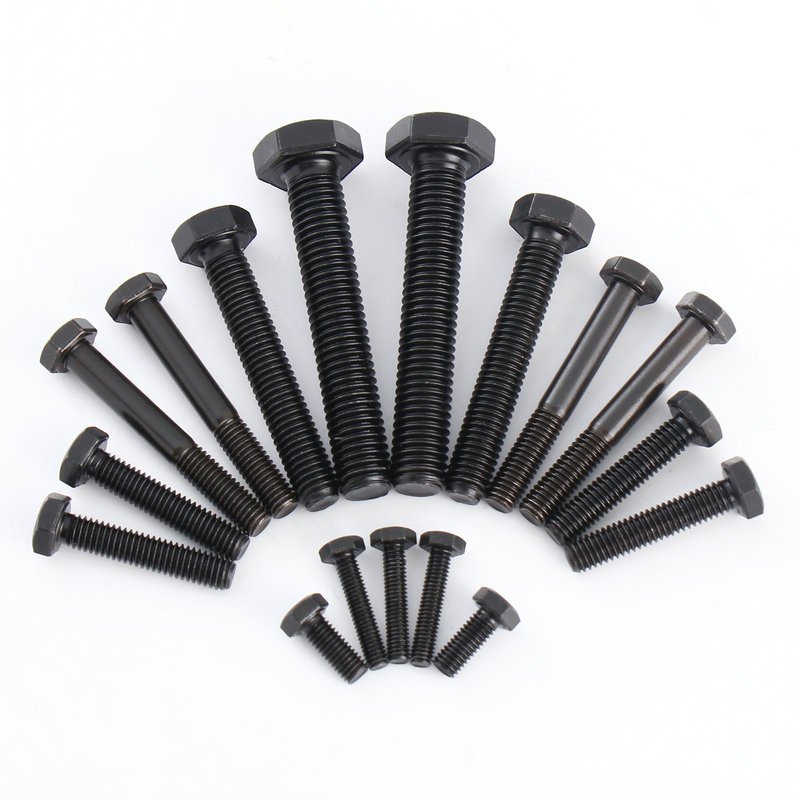
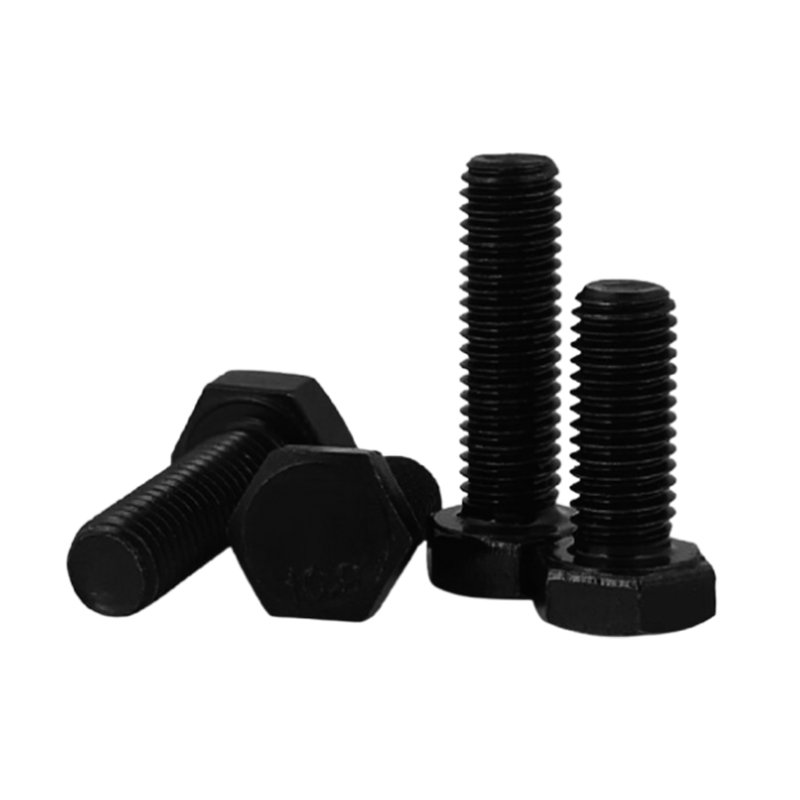
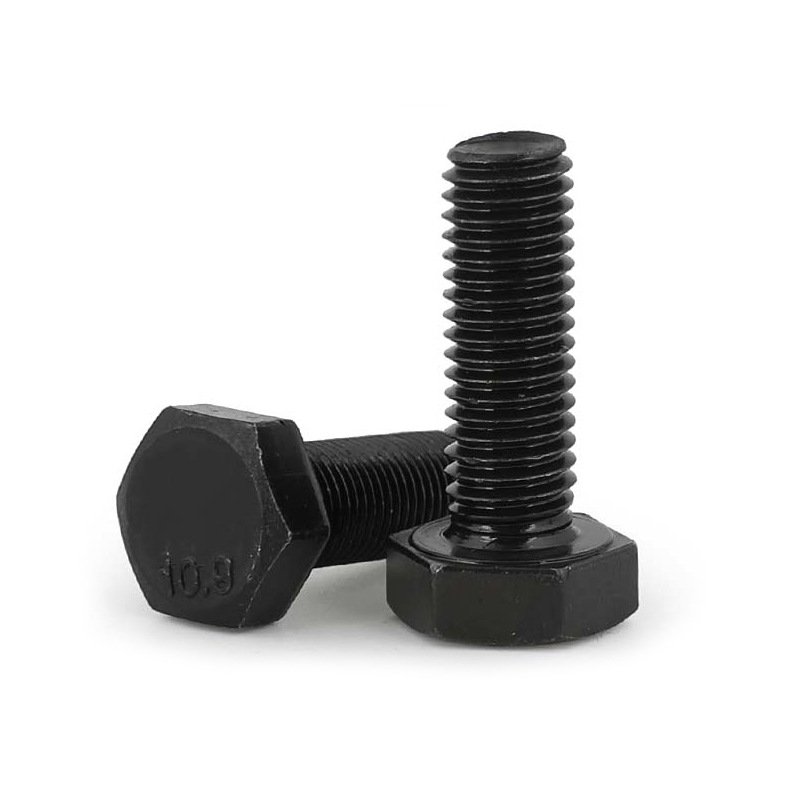
Grade 10.9 hexagon head bolts are a prime example of high-strength fasteners. They are widely used in mechanical and structural engineering applications where heavy loads and high stresses are encountered. Their key advantages lie in their exceptionally high tensile strength (≥1040 MPa) and yield strength (≥940 MPa), with these outstanding mechanical properties achieved through a rigorous heat treatment process.
Selection Criteria
Selection based on load type
- Primarily tensile loads: Select fully threaded type (GB/T 5783)
- Primarily shear loads: Select semi-threaded type (GB/T 5782); the smooth shank section offers superior shear resistance
Specification matching
- Diameter: M6–M64 (commonly M12–M30); length: 10–300 mm
- Thread precision: Class 6g for general applications, Class 6h for precision applications
Environmental suitability
- Corrosive environments: Hot-dip galvanised or Dacromet-coated finishes are recommended
- High-temperature environments (>200°C): High-temperature alloy steel must be used
Grade 10.9 hexagon bolts are essential fasteners in modern industry and construction, achieving a balance between high strength and good toughness through the use of alloy steel and quenching and tempering heat treatment. Their application must strictly adhere to standard specifications; every stage—from material selection and surface treatment to installation and pre-tensioning—directly affects the safety and durability of the connection. In critical structures, the use of lower-grade bolts as substitutes for Grade 10.9 bolts is strictly prohibited, and a comprehensive quality traceability system must be established to ensure engineering safety and the reliable operation of equipment.