
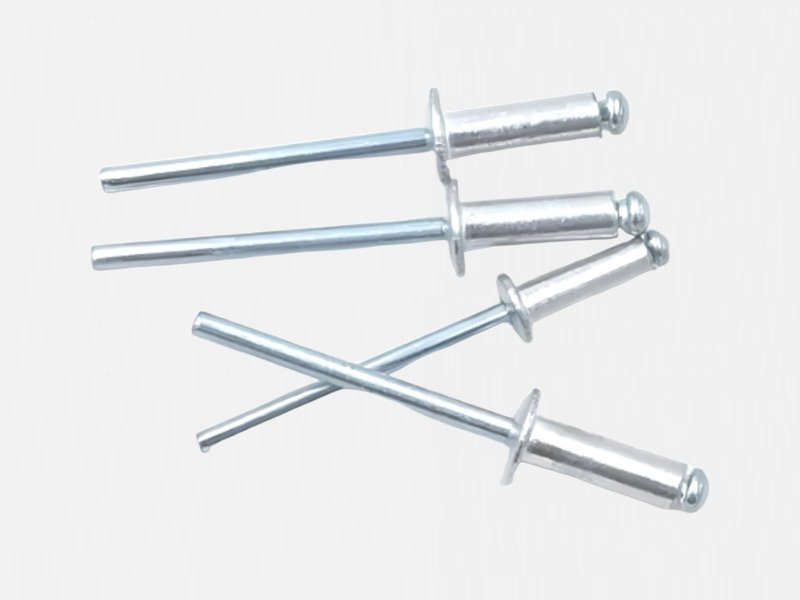

Aluminum-Steel Round Head Blind Rivet
Material : Nail body – Aluminum alloy, Nail core – Carbon steel
Style : Round head open-type blind rivet
Specifications : Φ3.2 Φ4 Φ4.8 Φ5 Φ6 Φ6.4 (Regular stock available, length 7mm-30mm optional)
Compatible Thickness : 0.5-5mm thin plate/color steel tile/aluminum alloy plate
Product Details
Material composition
Rivet tube (shell): Aluminium alloy (5052/5056 aluminium), lightweight, does not easily scratch aluminium sheets, offers some rust resistance, good toughness, and is unlikely to crack during expansion
Rivet shank (pull rod): Low-carbon iron (carbon steel), high tensile strength, sufficient riveting force, and resistant to breakage and slippage
Industry abbreviation: aluminium-iron blind rivet; complies with national standard GB 12615.3 and DIN 7337 for open-type flat-round-head blind rivets
Head: Round head (flat-round head / large disc head)
After riveting, the round cap protrudes to cover the hole, providing a large bearing surface and making it unlikely to tear through thin sheets
The finish is smooth and rounded, preventing cuts to the hands, making it suitable for exposed, visible applications; for a flush finish, opt for the countersunk variant instead.
Operating Principle (Single-sided blind riveting)
Operation is carried out from a single side only; the rivet can be securely fastened even if the opposite side is out of reach:
The rivet gun pulls the mandrel → the tail end of the aluminium tube is expanded to form a bulge that clamps the sheet metal → the mandrel breaks under tension and detaches, achieving permanent fastening in a single operation; the fastening is non-removable.
Product Advantages
- Excellent value for money, significantly cheaper than all-stainless-steel rivets, and the first choice for high-volume assembly;
- The aluminium casing does not damage aluminium profiles, sheet metal or thin plastic sheets, and will not crack the material;
- The tensile strength of the steel core is far greater than that of all-aluminium rivets, offering superior resistance to vibration and pull-out;
- Requires installation on one side only, making it ideal for enclosures, sealed chambers and the interiors of air ducts;
- The round head provides a large contact area, minimising the risk of the hole splitting in thin sheets.
Applicable scenarios

assembly of aluminium-plastic composite signage, sheet metal lettering and billboard frames;
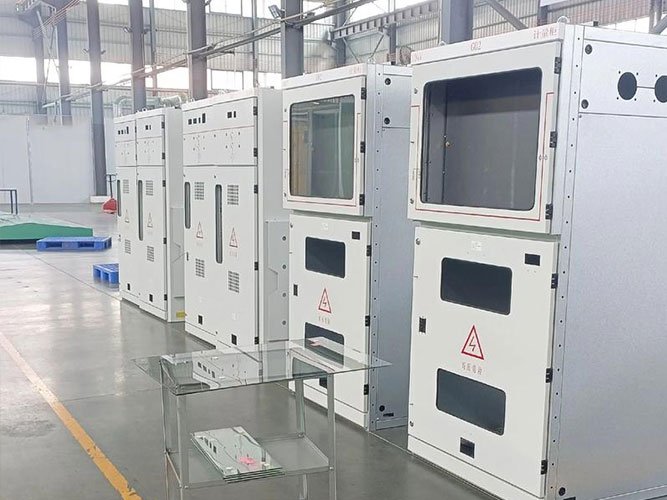
assembly of sheet metal casings for distribution boards, low-voltage distribution boxes and server cabinets;

fixing of aluminium alloy sub-frames for doors and windows, aluminium ceiling panels and ventilation duct flanges;

metal shelving, sheet metal cabinet bodies, kitchen cabinet bodies and luggage fittings;

Light-gauge steel sub-frames for interior fit-outs, and the joining of aluminium profiles in conservatories;
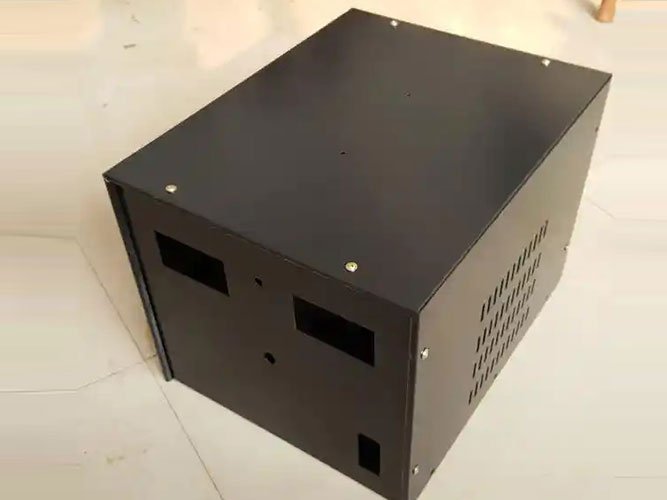
Batch assembly of electrical appliance casings, toys and small sheet metal components.
Construction Tips
- The diameter of the drill hole should be 0.1–0.2 mm larger than the shank diameter of the rivet; if the hole is too tight, the rivet cannot be pulled through, and if it is too loose, the rivet will not seat securely.
- For thin sheets, use a round-head rivet one size larger to prevent the rivet from being pulled out.
- In damp environments, avoid using aluminium-iron rivets wherever possible to prevent the internal iron core from rusting and causing leakage.