

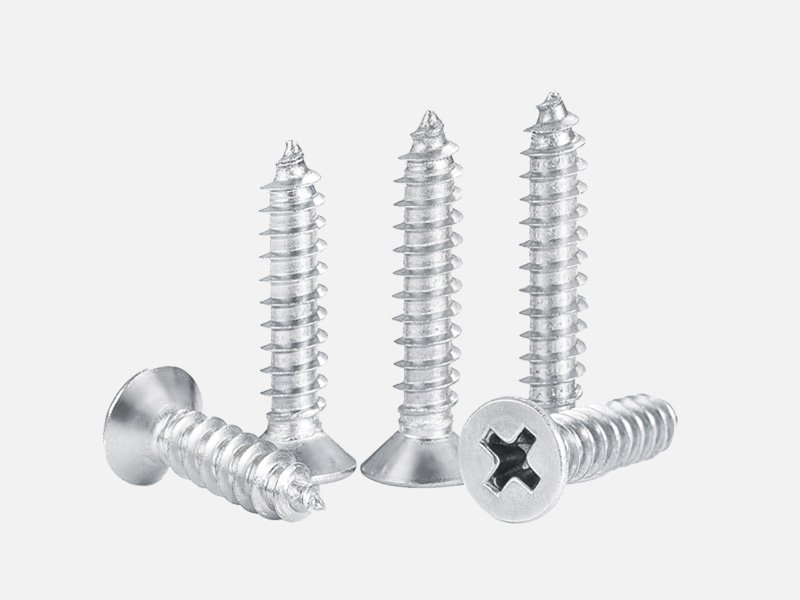
Window and door self-tapping screws
Material: High-quality carbon steel
Surface treatment: Electro-galvanised
Fixed nominal diameter: 7.5 mm (standard in the doors and windows industry)
Standard lengths: 60/70/80/90/100/110/120 mm; extended versions up to 200 mm available to order
Product Details
Window and door self-tapping screws are specialised fasteners designed for anchoring thermal break aluminium and system windows, conservatories and PVC-U window frames to walls, as well as for connecting corner brackets within profiles. They replace traditional plastic expansion sleeves and standard self-tapping screws, addressing industry pain points such as unstable wall fixings, cracking of aluminium profiles, subsequent rusting and water ingress, and low installation efficiency. They serve as standardised fasteners for door and window installation.
Core Principle
First, drill a 6.5 mm pilot hole and clear any dust from the hole. The screw is then screwed directly into the wall; its sharp threads cut matching threads into the concrete or brickwork, creating a mechanical interlock that does not rely on expansion to bear the load; this allows the window frame to be dismantled and readjusted.
Product Advantages
Reduces construction costs and improves efficiency, with greater approval from fitters
Compatible with aerated concrete block walls; no expansion sleeves are required, allowing direct dry-screwing; installation efficiency at each point is improved by over 40 per cent, eliminating wastage of auxiliary materials such as drill bits and expansion sleeves, and effectively reducing labour costs. The screws support disassembly and fine-tuning, making it more convenient to level and align window frames, significantly reducing on-site installation difficulty; fitters find them easy to use and have a high level of acceptance.
Sturdy and Reliable, Minimising After-Sales Risks for Windows and Doors at Source
Featuring a deep-threaded, progressive thread structure that interlocks tightly with the wall, providing excellent pull-out resistance. It remains secure even after prolonged exposure to the vibrations caused by opening and closing windows and doors, effectively preventing common issues such as sagging window frames, cracked seals, and water ingress.
The countersunk, concealed design does not damage the weather-resistant sealant layer on external walls, thereby reducing after-sales complaints regarding water ingress; the sharp cutting edge penetrates thermal break aluminium profiles smoothly, preventing cavity cracking, stripped threads and scrap, and minimising material wastage.
Versatile for multiple scenarios, compatible with various wall types and working conditions
It can be used for internal window and door assembly, such as joining thermal break aluminium mullions, securing corner brackets and fastening hardware bases; it can also be used for anchoring window frames to walls, compatible with a variety of wall substrates including aerated concrete blocks, red bricks and cement mortar.
Excellent value for money + stable supply – hassle-free one-stop procurement
Matching the quality of imported German self-tapping screws, these products offer a significant price advantage thanks to large-scale factory production; bulk wholesale orders qualify for volume discounts, and ample stock is always available. Complimentary T30 screwdriver bits and specialised drill bits are also provided, ensuring all window and door installation accessories are supplied in one go for more efficient procurement.
Installation Guidelines
- Drill holes at corners no closer than 150 mm from the edge, and at intermediate points no more than 500 mm apart.
- First drill holes in the profile, then drill 6.5 mm holes in the wall. Dust must be blown out of the holes thoroughly; otherwise, the lock will not secure properly.
- Tighten the screws with moderate force; do not over-tighten to avoid stripping the threads or damaging the wall.
- Screw fastening does not constitute load-bearing support; European standard PP load-bearing pads must be placed under the bottom of the window frame. Do not use wooden blocks or bricks to prop up the window.
- Once the screws have been driven in, seal the screw head areas with sealant to prevent rainwater from causing the screws to rust.