What Is the Hardness of a 10.9 Grade Bolt in HRC?
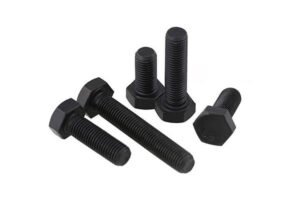
Grade 10.9 high-strength bolts are key fasteners used in steel structures, construction machinery and bridge engineering; hardness is a key indicator for assessing their mechanical properties, load-bearing capacity and fatigue resistance. The industry-standard Rockwell hardness (HRC) testing criteria directly determine the bolts’ strength, toughness and safety in use. According to the provisions of the national standard GB/T 3098.1 ‘Mechanical Properties of Fasteners – Bolts, Screws and Studs’, the Rockwell hardness (HRC) range for Grade 10.9 bolts is typically 32–39 HRC.
However, requirements regarding the hardness range vary slightly depending on the specific application and applicable standards. In the wind power sector, the hardness of Grade 10.9 high-strength bolts is generally controlled within the range of 32–39 HRC; whereas in steel space-frame structures with bolted spherical joints classified as Safety Grade I, Grade 10.9 high-strength bolts are required to have a hardness of 32–36 HRC. Furthermore, some standards specify a range of 34–41 HRC. These differences stem from varying considerations regarding safety factors and performance priorities across different industries.
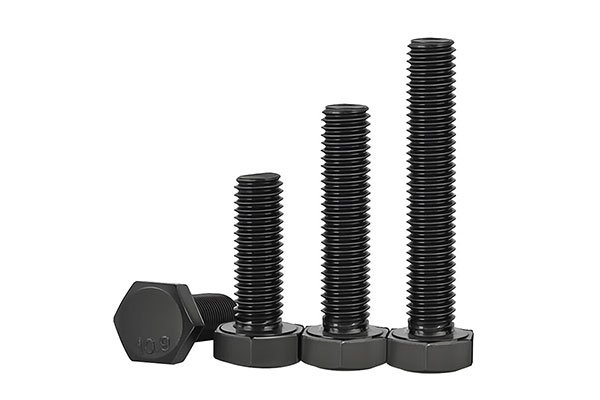
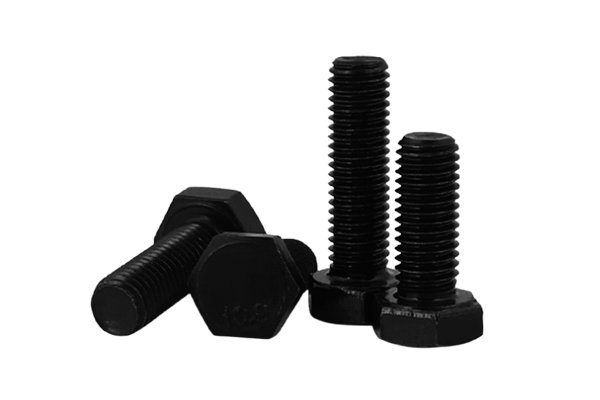
There is a close correlation between hardness and strength. Grade 10.9 bolts have a tensile strength of not less than 1040 MPa and a yield strength of not less than 940 MPa. Higher hardness ensures that the bolts are less prone to deformation or fracture when subjected to significant tensile and shear loads. Commonly used materials include alloy steels such as 35Cr, 40Cr, SCM435 and 40CrMo. Through quenching and tempering heat treatment processes, a martensitic microstructure is formed within the material, thereby achieving the required hardness and strength.
It is worth noting that both excessively high and excessively low hardness levels can affect the bolt’s performance. Excessively high hardness may increase the bolt’s brittleness, making it prone to fracture under impact loads; whereas excessively low hardness implies insufficient strength and a reduced load-bearing capacity. Therefore, precisely controlling the hardness within the standard range is a crucial prerequisite for ensuring the reliability of the bolts.
In summary, the hardness of Grade 10.9 bolts typically ranges between 32 and 39 HRC, with specific values subject to the relevant product standards and design requirements. This hardness range not only reflects their high-strength performance but also serves as a key safeguard for the safety of engineering structures.