Why Are Bolts Hexagonal?
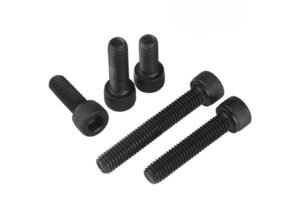
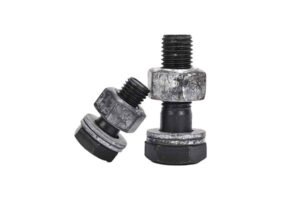
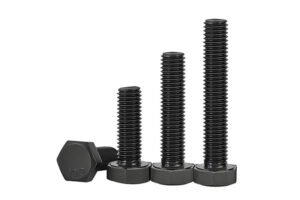
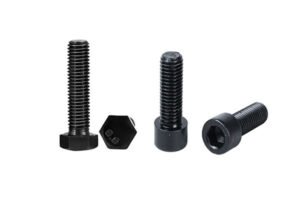
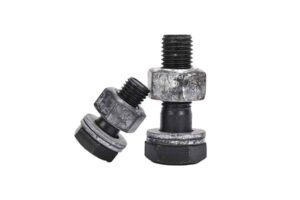
From furniture and household appliances to cars and machinery, tiny hexagonal bolts are ubiquitous in our daily lives, and almost all of them are hexagonal in shape. Many people inevitably wonder: given that circular shapes are smooth and free of sharp edges, and square shapes are neat and easy to manufacture, why does the industrial sector favour hexagonal bolts above all others? In fact, this is not a random design choice, but rather the optimal solution devised by humanity through a combination of mechanics, practicality and manufacturing processes.
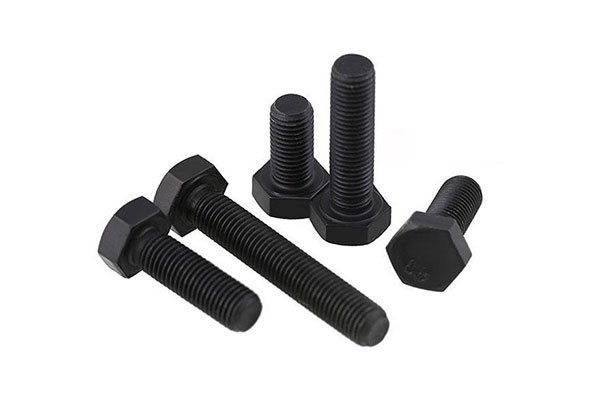
The greatest advantage of the hexagonal shape is that it strikes a balance between ease of operation and flexibility of fit. As a spanner is required to tighten or loosen bolts, the number of sides of a polygon directly affects the angle at which the spanner can be applied. Square bolts require a 90-degree angle to engage the spanner properly, making them difficult to turn in confined spaces; octagonal, decagonal and other polygonal bolts have too many edges, making it easy for the spanner to slip or fail to grip securely. In contrast, the angle between any two sides of a hexagon is 60 degrees, meaning the grip position can be changed with a mere 30-degree turn. This allows for effortless tightening even within the narrow gaps of machinery or between tightly packed components, making it suitable for the vast majority of working scenarios.
In terms of structural strength and durability, the hexagonal shape also offers unrivalled advantages. When bolts are tightened, they are subjected to compressive and torsional forces, with the corners acting as the primary load-bearing points. Triangular corners are too sharp and are prone to deformation and fracture under load; circular shapes prevent the spanner from engaging precisely, making tightening impossible. The hexagonal shape features rounded, moderately sized corners that distribute stress evenly, making it less prone to chipping or stripping during tightening. It can withstand high-strength tightening pressures whilst maintaining structural stability over the long term, thereby significantly extending its service life.
Furthermore, the production of hexagonal bolts offers excellent value for money. Compared to octagonal or dodecagonal shapes, the manufacturing process for hexagons is simpler; moulding, turning and grinding are less complex, allowing for standardised mass production and effectively reducing industrial manufacturing costs. Moreover, the standardised hexagonal dimensions ensure universal compatibility with tools such as spanners and sockets, eliminating the need for specialised tools for different bolts and greatly enhancing efficiency in industrial assembly and routine maintenance.
Behind the seemingly ordinary hexagonal shape lies a sophisticated mechanical logic. It strikes a perfect balance between spatial compatibility, mechanical performance and manufacturing practicality, meeting complex industrial demands with a minimalist geometric form. This is the core secret behind the hexagonal bolt’s century-long prevalence and its continued status as the industry standard.