What Bolts Are Used for Steel Structures?
Bolts are the core fasteners used in the assembly and connection of steel structures, and their performance directly affects the stability and safety of steel structures in buildings, bridges and industrial plants. Unlike standard mechanical bolts, bolts specifically designed for steel structures are strictly categorised according to their strength grades, load-bearing characteristics and construction methods, and are primarily divided into two main categories: standard bolts and high-strength bolts. These two types of bolts differ significantly in their mechanical properties and have distinct areas of application, making them a crucial consideration in the selection of materials and the design of steel structures.
Standard bolts are commonly used for basic connections in steel structures, with Grade 4.8, Class C rough-finished bolts being the most widespread; these are supplemented by Grade 5.6 and Grade 8.8, Class A and B precision-finished bolts. Grade C coarse-finished bolts have a lower machining precision, with a clearance of 1–2 millimetres between the shank and the hole. They offer the advantages of ease of installation and low cost; however, their shear and compressive strength is relatively low. They are generally only suitable for secondary connections subjected to tensile forces, or for temporary fixing and auxiliary positioning during the installation phase of steel structures. By contrast, Grade A and B precision bolts feature high machining accuracy, uniform stress distribution and good sealing properties, and can be used for precision connections under static loads. However, due to the complexity of the construction process and their poor cost-effectiveness, they are now rarely used in the main structures of modern steel buildings.
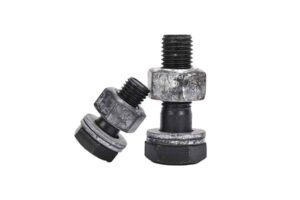
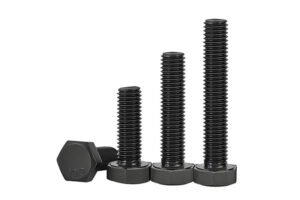
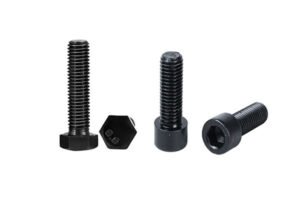
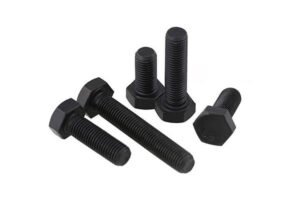
High-strength bolts are the core fasteners in modern steel structure projects; the most commonly used strength grades are 8.8 and 10.9, with grade 10.9 being the most widely used. High-strength bolts are manufactured from high-quality alloy steel and undergo heat treatment processes such as quenching and tempering, resulting in tensile, compressive and fatigue resistance far superior to that of ordinary bolts. Based on their load-bearing principles and installation methods, they can be subdivided into two categories: large hexagonal high-strength bolts and torsional-shear high-strength bolts, corresponding to the friction and bearing modes, respectively.
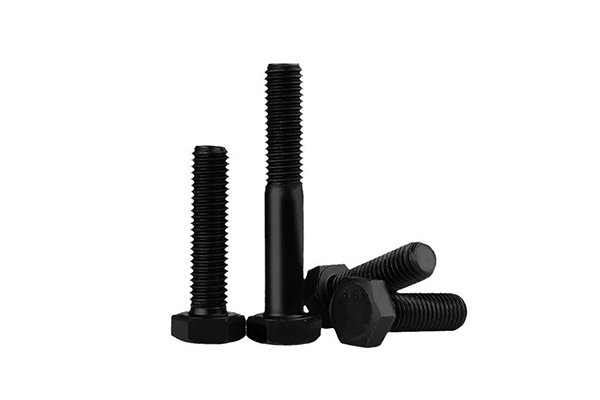
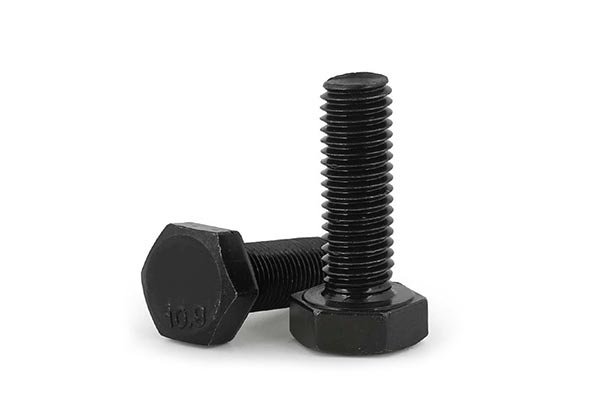
Friction-type high-strength bolts rely on preload to clamp the connecting plates together, transferring loads via the friction between the plate surfaces. Prior to installation, the contact surfaces of the steel plates must undergo treatments such as sandblasting and rust removal to ensure that the anti-slip coefficient meets the required standards. Friction-type high-strength bolt connections offer high stiffness, minimal deformation and outstanding fatigue resistance; they are capable of effectively withstanding dynamic load impacts and are widely used in critical load-bearing structures such as steel frames in high-rise buildings, long-span bridges and heavy-duty crane girders. Compression-type high-strength bolts, on the other hand, allow for slight slippage between the plate surfaces; the load is ultimately borne by the shear force of the bolt shank and the compressive force against the hole walls, resulting in a higher load-bearing capacity. They are suitable for general steel structure connections subjected primarily to static loads, but must not be used in components subjected to repeated dynamic loads.
Both types of high-strength bolts have their own advantages: large hexagonal high-strength bolts are widely applicable and allow for precise control of tightening force using a torque wrench; torque-shear type high-strength bolts feature a built-in shearable torque tip, eliminating the need for specific torque control during installation. They are simple to use and ensure consistent quality, making them particularly suitable for large-scale, standardised steel structure construction.
In summary, the selection of bolts for steel structures should adhere to the basic principle of ‘using standard bolts for non-load-bearing parts and high-strength bolts for the main load-bearing elements’. Thanks to their excellent mechanical properties, high-strength bolts have become the mainstream choice for steel structure connections; their appropriate selection and compliant installation are key to ensuring the safety, stability and durability of steel structure projects.