What Is the Difference Between Hex Bolts and Hex Socket Bolts?
In fields such as mechanical manufacturing, construction and equipment maintenance, hex bolts and hex socket bolts are the two most widely used types of fasteners. Although their names are similar and their functions are identical, they are often confused by the general public; however, there are clear distinctions between them in terms of structural design, suitable tools, load-bearing characteristics and applications. Only by accurately distinguishing between them and selecting the appropriate type can one ensure a reliable connection and extend the service life of the equipment.
Head Structure and Appearance
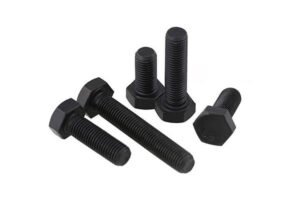
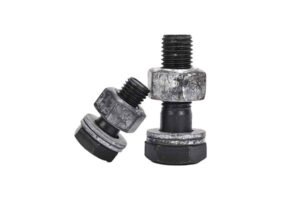
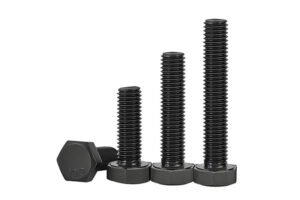
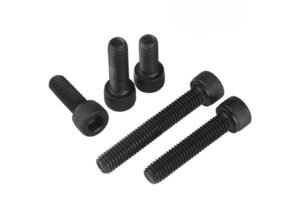
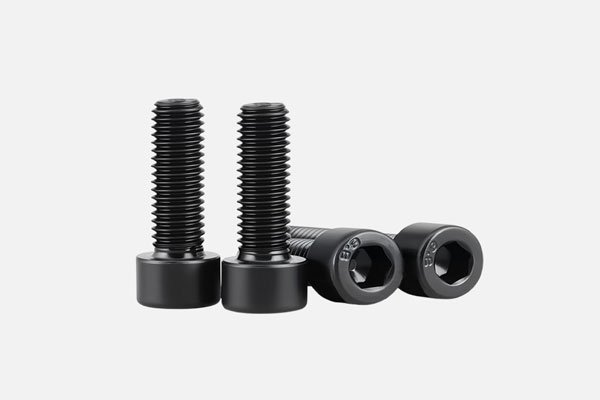
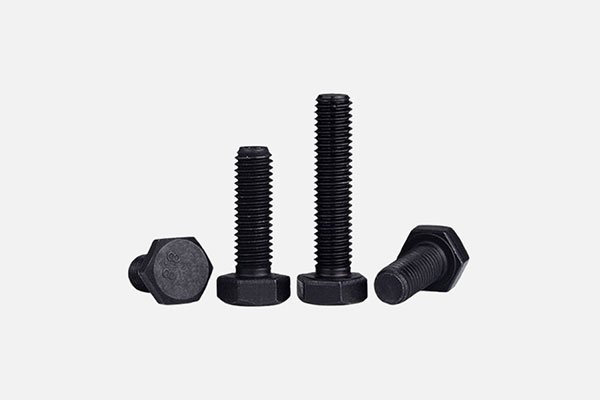
Standard hexagon bolts, also known as external hexagon bolts, feature a raised, solid regular hexagonal head with distinct, neatly exposed edges. They are relatively large in overall size and lack any recessed grooves. In contrast, the heads of internal hex bolts are typically cylindrical or countersunk in shape, with a flat, smooth surface and a hexagonal recess embedded at the centre. They have no protruding edges on the exterior, resulting in a more compact and petite overall structure. They are suitable for concealed installation and meet the requirements for flush assembly in precision equipment.
Compatible Tools and Installation Methods
External hex bolts are extremely versatile; they can be easily fitted and removed using open-ended spanners, box-end spanners and socket spanners. These tools are common and readily available, requiring no specialised accessories, making them particularly suitable for outdoor settings and construction sites where speed and convenience are paramount. Internal hex bolts, on the other hand, require the use of a specialised internal hex key of the correct size. Tool selection is relatively limited; during operation, the key must be inserted vertically into the recess of the head, ensuring precise application of force, but this places higher demands on the tool’s dimensions and accuracy.
Load-bearing Performance and Fastening Strength
Hex bolts and hex socket bolts each have distinct load-bearing characteristics. Hex bolts rely on the outer surface of the hexagonal head to bear the load; the large contact area of the spanner ensures even force distribution, allowing for the application of greater torque. They offer strong fastening strength, excellent vibration resistance and are less prone to loosening, making them suitable for heavy-load, high-pressure and high-vibration operating conditions. Hex socket head cap screws bear the load via the inner walls of the recess; the load-bearing area is concentrated internally, resulting in a slightly lower torque capacity. However, as the head has no exposed edges, there is no risk of impact or wear, and the head can be countersunk into the workpiece, taking up no external space, making them suitable for lightweight and precision assembly applications.
Applications
External hex bolts are commonly used in applications such as steel structures in construction, large-scale machinery and equipment, outdoor facilities and furniture frames, where high clamping force and load-bearing capacity are required and there is ample installation space. Hex socket head cap screws, on the other hand, are primarily suited to confined spaces, precision equipment and applications where a smooth, flush finish is required. They are widely used in moulds, precision instruments, automotive components, hardware and household appliances. Their concealed installation ensures a clean appearance whilst avoiding safety hazards and wear issues caused by protruding parts.
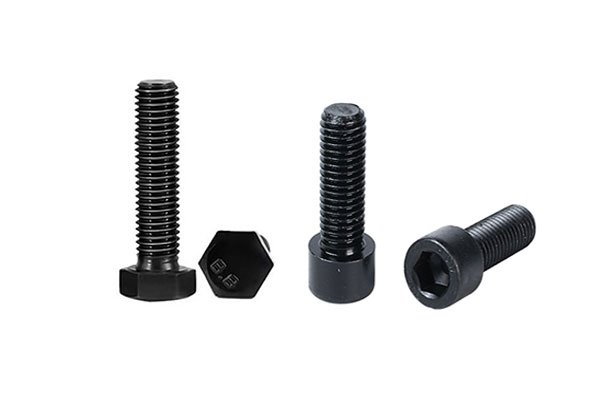
In summary, there is no absolute superiority or inferiority between the two types of bolts. Hex head bolts excel in their versatility, high clamping force and ease of assembly and disassembly, making them suitable for general heavy-duty applications; hex socket bolts, on the other hand, are advantageous due to their compact size, concealed installation and suitability for precision applications. In practical applications, simply selecting the appropriate type based on the installation space, required clamping force, aesthetic requirements and operational context will maximise the value of the fasteners.