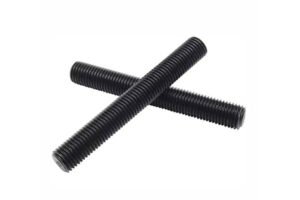
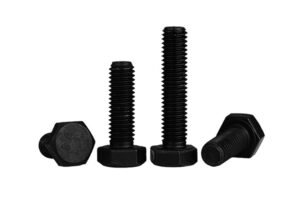
What Is a Grade 10.9 Bolt?
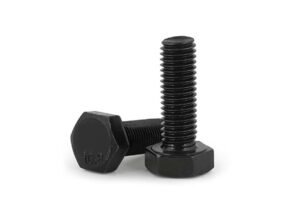
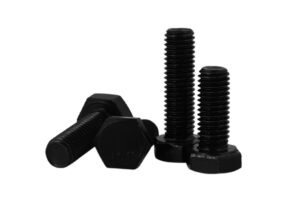
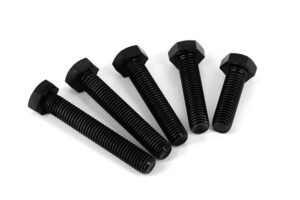
Grade 10.9 hexagon bolts are high-strength fasteners widely used in the industrial sector, suitable for a variety of demanding operating conditions. Compared with hexagon bolts of other grades, the numerous advantages of Grade 10.9 hexagon bolts stem primarily from their grade definition, material and manufacturing processes, and performance specifications. To help you quickly understand Grade 10.9 hexagon bolts, we will introduce them from five key perspectives.
Grade definition: Grade 10.9 refers to high-strength hexagonal bolts, where ‘10’ denotes a minimum tensile strength of 1040 MPa, ‘9’ denotes a yield-to-tensile strength ratio of 0.9, meaning the minimum yield strength is 940 MPa. The grade designation directly reflects its core load-bearing capacity, distinguishing it from the medium-to-low-strength bolts of grades 4.8 and 5.8, whilst being lower than the ultra-high-strength bolts of grade 12.9.
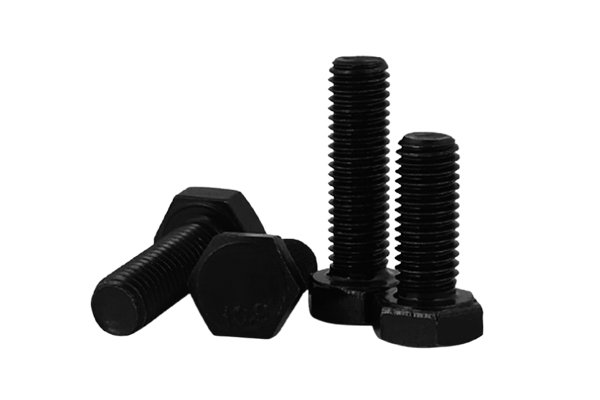
Materials and Manufacturing Process: Grade 10.9 hexagon head bolts are manufactured from high-quality alloy structural steel (such as 35CrMoA and 40Cr) and undergo a rigorous quenching and tempering heat treatment process (quenching followed by high-temperature tempering). This process ensures a more uniform internal microstructure of the steel, balancing hardness and toughness whilst preventing brittle defects. This is the key factor underpinning their high strength and reliability, distinguishing them from the low-carbon steel materials and simple heat treatment processes used in medium- and low-strength bolts.
In terms of core performance, in addition to their specified tensile and yield strengths, Grade 10.9 hexagon head bolts also offer excellent shear resistance, impact resistance and wear resistance. They are capable of maintaining stable connections under long-term heavy loads and in vibrating environments, and are unlikely to undergo plastic deformation or fracture. However, it should be noted that they have a high hardness and moderate corrosion resistance, so appropriate protective measures must be taken depending on the environment.
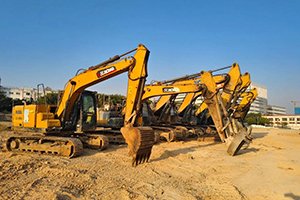
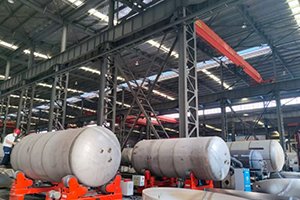
Due to their high strength, these fasteners are primarily used in demanding applications characterised by heavy loads, intense vibration and stringent requirements for connection reliability. Their applications span sectors such as construction machinery (core components of excavators and cranes), transport (car engines and high-speed rail components), new energy (wind power and photovoltaic equipment), and heavy-duty equipment (large machine tools and pressure vessels), making them the core fasteners for heavy-load connections in industrial production.
Applications of Grade 10.9 hexagon bolts


Precautions for use: When installing, ensure the correct torque is applied; excessive torque may damage the threads or bolt shank, whilst insufficient torque may cause the connection to become loose. Use compatible nuts and washers, and avoid mixing fasteners of different grades. In damp or corrosive environments, apply appropriate anti-corrosion measures (such as galvanisation or the application of anti-corrosion agents). Do not repeatedly dismantle and reuse the fasteners, as this may cause thread wear and reduce load-bearing capacity.
Grade 10.9 hexagon bolts are high-strength, highly reliable general-purpose fasteners; their performance and applications are defined by their grade standards. By understanding these aspects, one can quickly and accurately determine the appropriate applications for them; when used correctly, their load-bearing capabilities can be fully utilised.