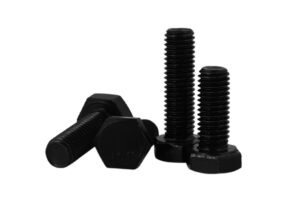
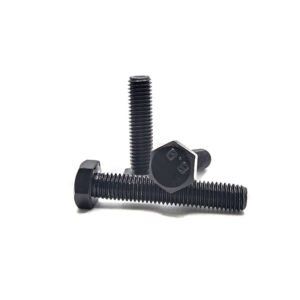
What Are the Marks Shown on the Head of a Bolt?
Bolts are fasteners that are ubiquitous in our daily lives; from the assembly of furniture to industrial equipment and construction projects, they are indispensable. However, many people may never have noticed that the seemingly insignificant numbers, letters or engraved lines on the bolt head are actually a set of important ‘identification codes’—these are the markings on the bolt head. They carry crucial information about the bolt, directly affecting safety and compatibility, and can be described as the bolt’s ‘invisible instruction manual’.
The markings on bolt heads are not applied at random, but adhere to national and international standards. They are primarily used to indicate the bolt’s key parameters, enabling users to identify and select the correct bolts quickly. Among these, the most common and important markings are those indicating performance grades; these are also the type we encounter most frequently in everyday use. China adheres to the GB/T 3098.1 national standard, which is aligned with international ISO standards.
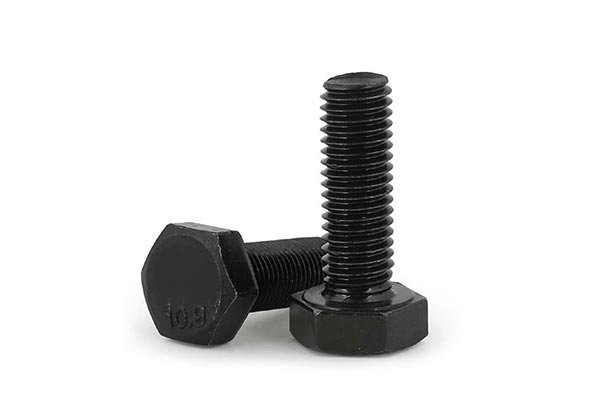
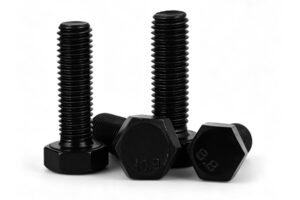
Performance grade markings usually consist of numbers; the most common format for metric bolts is ‘X.Y’, such as grades 4.8, 8.8, 10.9 and 12.9. Although this set of numbers appears simple, it holds the key to the bolt’s strength: the first digit represents 1/100th of the bolt material’s nominal tensile strength, measured in MPa; the second digit is 10 times the yield-to-tensile strength ratio (the ratio of yield strength to tensile strength). For example, an 8.8-grade bolt indicates that its tensile strength is no less than 800 MPa, and its yield strength is no less than 800 × 0.8 = 640 MPa; it is commonly used in medium-load-bearing applications such as machinery and automotive engineering. In contrast, a 10.9-grade bolt has a tensile strength of up to 1000 MPa and a yield strength of 900 MPa; as a high-strength bolt, it is suitable for critical load-bearing structures in sectors such as construction and aerospace.
In addition to performance grades, bolt heads may also feature other types of markings. The most common are manufacturer’s markings, typically consisting of simple letters, symbols or company logos, such as ‘J’, ‘R’ or specific graphics. These serve primarily to trace the product’s origin, and markings from well-known brands often indicate more reliable quality control. Furthermore, bolts designed for specialised applications feature specific markings: left-hand thread (reverse thread) bolts are marked with the letters ‘LH’ or a distinctive groove to prevent incorrect installation; safety-critical bolts used in sectors such as automotive and aerospace also bear complex codes incorporating production batch numbers and furnace numbers, enabling traceability throughout their entire lifecycle.
It is important to note that bolts without any markings are mostly low-grade, non-standard components with insufficient tensile strength and toughness. They are not recommended for critical applications involving load-bearing or stress-bearing conditions, as this may lead to safety hazards such as loosening or breakage. Furthermore, bolts of different grades must not be mixed indiscriminately; for example, Grade 8.8 bolts must be used with nuts and washers of the corresponding grade, and must be tightened using the appropriate procedure to ensure they perform to their full potential.
Although the markings on a bolt head are small, they contain crucial information regarding safety and compatibility, serving as the bolt’s ‘identity card’. Understanding the meaning of these markings not only helps us to select and use bolts correctly, thereby avoiding safety hazards caused by the misuse of substandard products, but also allows us to appreciate the technical expertise behind this tiny component and to appreciate the rigour and attention to detail inherent in industrial manufacturing.