Are 10.9 Bolts Brittle?
Grade 10.9 bolts are classified as high-strength bolts and are commonly used in heavy-duty, demanding applications; however, many people mistakenly believe that ‘high strength’ equates to ‘unbreakable’, which is not the case. Whether a bolt will break is not determined by its grade alone, but is influenced by a range of factors, including design, material, manufacturing processes, installation and usage, and the operating environment.
- Inappropriate selection:If bolts are selected inappropriately, the risk of fracture increases significantly. Grade 10.9 bolts have clearly defined tensile and yield strength limits. If, during the design phase, these are not taken into account in conjunction with actual load calculations, and bolts of an undersized specification are selected, or if the connection structure is not appropriately matched, the bolts may be subjected to forces exceeding their rated load over an extended period. This can lead to gradual plastic deformation and ultimately result in fracture. Furthermore, an unreasonable thread design or a mismatch between the bolt length and the hole diameter can also cause stress concentration, leading to fracture.
- Materials and Manufacturing Processes:Grade 10.9 bolts are manufactured from high-quality alloy structural steel and undergo rigorous quenching and tempering heat treatment to ensure a balance between hardness and toughness; However, if the material is adulterated, contains excessive impurities, or the heat treatment process fails to meet standards (such as insufficient quenching or inappropriate tempering temperatures), this may result in internal defects in the bolt, such as cracks or microstructural irregularities. Under load, this makes the bolt prone to brittle fracture, with the risk being particularly high in low-temperature environments.
- Improper installation and use:Inappropriate torque control during installation—excessive torque can cause thread damage and deformation of the bolt shank, whilst insufficient torque can lead to a loose connection, resulting in vibration-induced fatigue failure; bolts that are repeatedly dismantled and reused will suffer thread wear, reducing their load-bearing capacity and increasing the likelihood of fracture; furthermore, failure to remove debris from the threads or to use suitable anti-loosening devices during installation will also heighten the risk of fracture.
- Environmental Factors:In corrosive environments—such as those that are damp, saline, or acidic or alkaline—bolts are prone to rusting, which leads to a reduction in cross-sectional area and a decrease in strength; prolonged use can result in corrosion-induced fracture. High-temperature environments reduce the hardness and toughness of bolts, whilst low-temperature environments cause them to become brittle; both conditions increase the likelihood of fracture.
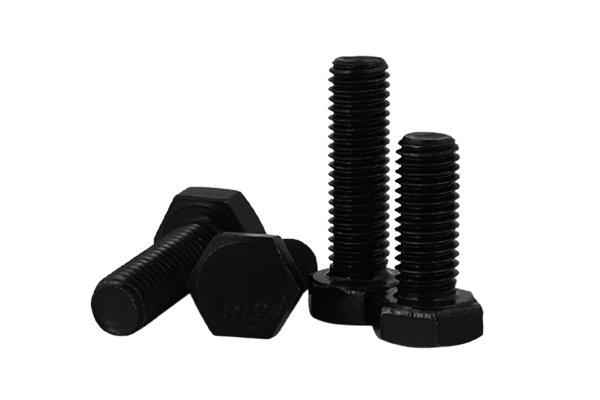
Therefore, Grade 10.9 bolts are not immune to fracture; such failures are typically linked to design, material quality, manufacturing processes, installation, usage and environmental conditions. By carefully selecting the appropriate type, using certified products, ensuring proper installation and adapting to the operating environment, it is possible to effectively mitigate the risk of fracture and fully leverage the advantages of their high strength.