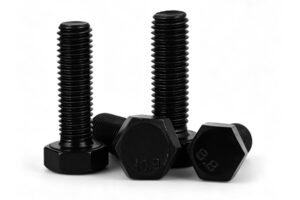
What Material Is Hex Bolt 8.8 Made Of?
Grade 8.8 hexagon bolts are among the most widely used high-strength fasteners in the industrial sector, and the choice of material directly determines the bolt’s strength, toughness and service life. However, the raw materials used to manufacture Grade 8.8 hexagon bolts are not limited to a single type; they are primarily made from medium-carbon steel or low-carbon alloy steel, and it is only through the application of precise heat treatment processes that the performance standards of Grade 8.8 can be achieved.
The most commonly used material for Grade 8.8 hexagon bolts is medium-carbon steel, with cold-headed steels such as 35 steel, 45 steel, ML35 and ML40 being the most prevalent. The carbon content of these steels is controlled between 0.35% and 0.45%, ensuring a certain level of strength whilst offering good ductility and machinability; they are the preferred choice for balancing performance and cost. For applications requiring higher strength, low-carbon alloy steels such as 10B21 and 10B33 are selected. By adding small amounts of alloying elements, the hardenability and toughness of the bolts are further enhanced.
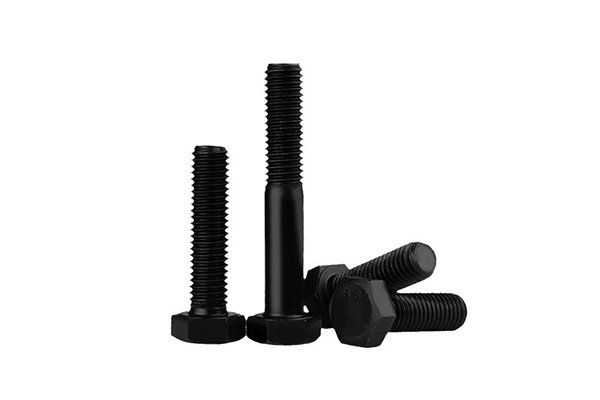
However, the raw material alone cannot meet the strength requirements for Grade 8.8 bolts; it must undergo a ‘quenching and tempering’ heat treatment process. First, the bolt is heated to 850–880°C and then rapidly quenched in oil, transforming its internal structure into high-hardness martensite; subsequently, it is held at a temperature of 400–500°C for tempering to relieve internal stresses and balance hardness with toughness. Following this process, the bolt ultimately achieves performance standards of a nominal tensile strength of 800 MPa and a yield strength of 640 MPa.
Through a combination of appropriate material selection and heat treatment processes, Grade 8.8 hexagon bolts are widely used in industries such as machinery, construction and automotive, where they are capable of withstanding heavy loads and complex operating conditions. This combination of materials and processes not only ensures the reliability of the bolts but also balances production efficiency, making them an indispensable basic fastener in industrial manufacturing.