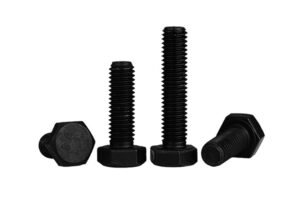
What Does 10.9 Mean on a Bolt?
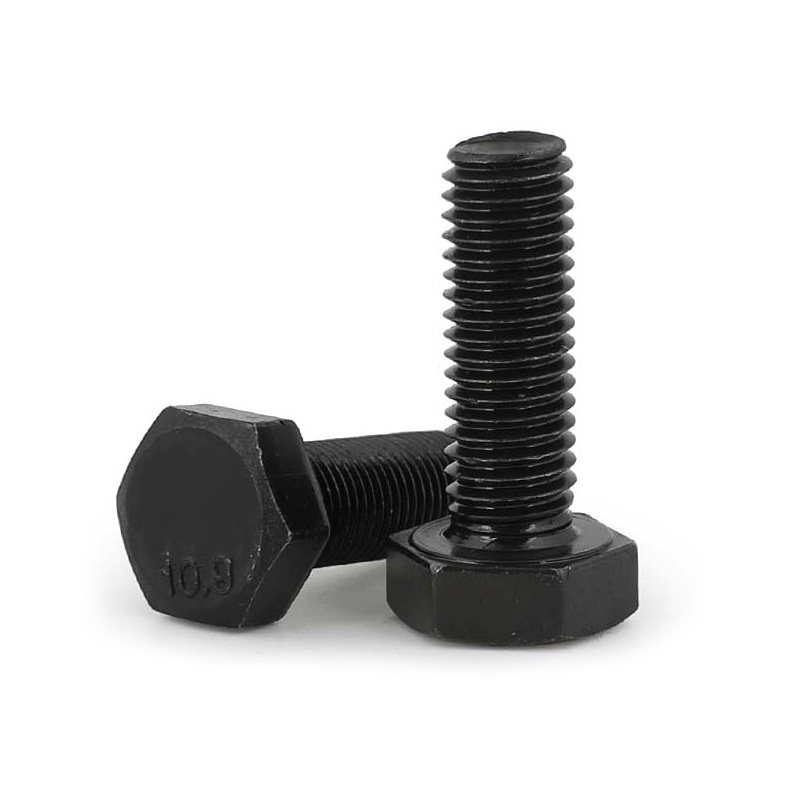
In steel structure construction, one often sees the number ‘10.9’ engraved on the heads of high-strength bolts. This is not merely a random sequence of numbers, but rather a ‘code’ representing the bolt’s core performance characteristics. It directly determines the bolt’s load-bearing capacity and suitability for specific applications, and is crucial to the safety and stability of steel structure projects. As a manufacturer specialising in the research, development and production of high-strength bolts for steel structures, we are here today to provide a comprehensive explanation and reveal the key information behind the ‘10.9’ designation.
Unpacking the true meaning of 10.9 high-strength bolts
“10.9” denotes the performance grade of high-strength bolts; it is a key indicator of bolt strength and serves as a crucial basis for selection in engineering applications. It consists of two numbers, representing the bolt’s tensile strength and yield-to-tensile strength ratio respectively; together, these determine the bolt’s reliability under complex operating conditions.
- “10” represents the bolt’s nominal tensile strength, measured in MPa (megapascals). Specifically, this means that the bolt’s maximum tensile strength is no less than 1000 MPa; in actual production, to ensure a safety margin, it is typically set at 1040 MPa or higher. Put simply, tensile strength is the maximum tensile force a bolt can withstand before breaking. A strength of 1000 MPa means that each square millimetre of the bolt’s cross-section can withstand a tensile force exceeding 100 kilograms; this is the core reason why ‘10.9’ grade bolts are referred to as high-strength bolts.
- ‘9’ represents the bolt’s yield-to-tensile strength ratio, i.e. the ratio of the bolt’s yield strength to its tensile strength is 0.9. Combining this with the tensile strength mentioned earlier, it can be calculated that the yield strength of a Grade 10.9 bolt is no less than 900 MPa (1000 MPa × 0.9). Yield strength refers to the tensile force at which a bolt begins to undergo plastic deformation and cannot return to its original state. A design with a yield-to-tensile ratio of 0.9 ensures that the bolt possesses sufficient strength whilst avoiding brittle fracture caused by excessive hardening. This allows the bolt to combine strength and toughness when subjected to heavy loads and vibration, which is crucial for the long-term safety of steel structures.
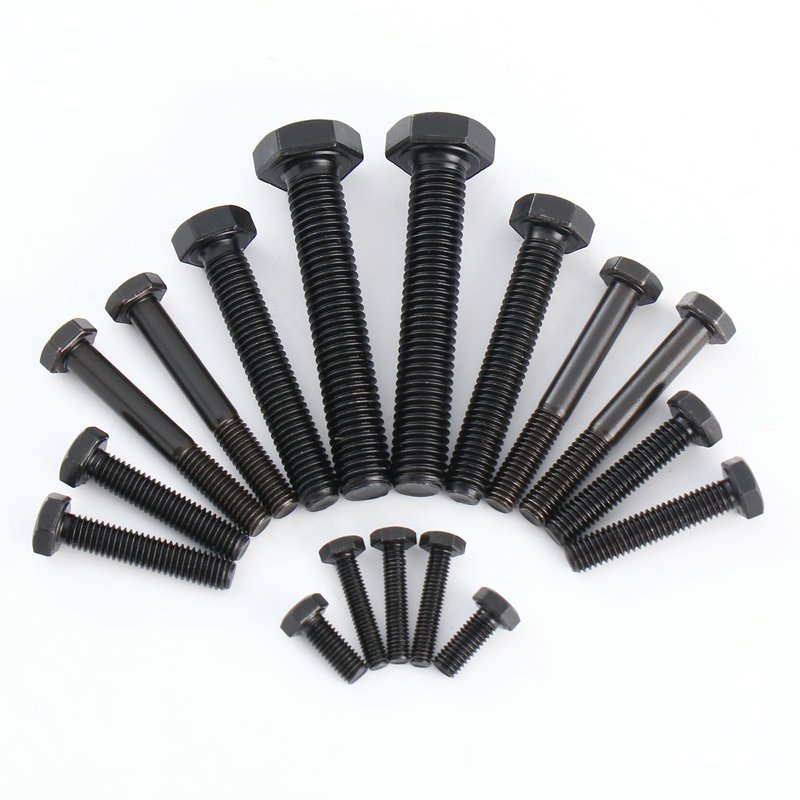
Many people wonder why Grade 10.9 bolts are often the preferred choice in steel structure engineering. This is closely related to the load-bearing characteristics of steel structures. In applications such as steel-framed buildings, bridges, industrial plants and tower cranes, which must withstand complex loads including wind loads, seismic forces and the dead weight of equipment, the bolts used at connection points must possess high strength, high toughness and fatigue resistance. Grade 10.9 bolts achieve a balance between strength and toughness through rigorous material selection (commonly using alloy steels such as 20MnTiB and 35CrMo) and quenching and tempering treatment (quenching followed by tempering). They are capable of effectively resisting fatigue damage caused by long-term loads and repeated vibrations, thereby preventing structural safety hazards resulting from bolt failure. Consequently, they are widely used in connections within the core load-bearing sections of steel structures.
In summary, the ‘10.9’ marking on a bolt symbolises strength and safety; it represents the strict definition of bolt performance set out in the national standard, and serves as a key reference for selecting bolts in steel structure engineering. As a bolt manufacturer, we consistently adhere to national standards, specialising in high-strength bolts for steel structures. Through professional manufacturing processes and rigorous quality control, we ensure that every Grade 10.9 bolt serves as a ‘guardian’ of steel structure safety, providing reliable and durable connection solutions for all types of steel structure projects.