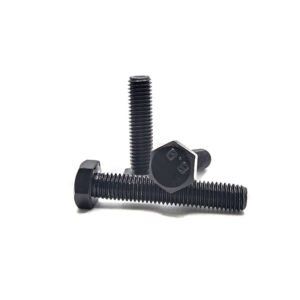
What Are the Grades of Hex Bolts?
Hex bolts are the most commonly used fasteners in mechanical assemblies; their grade directly determines their load-bearing capacity, toughness and suitability for specific applications. Hex bolts of different grades vary significantly in terms of material, manufacturing process and performance, making them suitable for different load requirements and operating environments. Many people often find it difficult to distinguish between the different grades when selecting them. Below is a detailed overview of the common grades of hex bolts and their specific applications, to assist you in making the right choice.
Based on their mechanical properties, hexagon bolts can be broadly classified into two main categories: medium-to-low strength and high strength. The medium-to-low strength category is primarily comprised of Grade 4.8 and Grade 5.8 bolts, whilst the high-strength category most commonly includes Grade 8, Grade 10.9 and Grade 12.9 bolts.
Grade 4.8 is the most basic grade of medium-to-low-strength hexagon head bolts. Made from low-carbon steel, they have a tensile strength of ≥400 MPa and a yield strength of ≥320 MPa. Characterised by low cost, ease of machining and relatively low load-bearing capacity, they are primarily suitable for applications involving light loads, no vibration and where high reliability of the connection is not required, such as furniture assembly, securing lightweight shelving, standard agricultural implements and fixing simple equipment casings.
Grade 5.8 hexagon head bolts have a slightly higher strength than Grade 4.8 bolts. They are typically made of medium-carbon steel, with a tensile strength of ≥500 MPa and a yield strength of ≥400 MPa, offering superior toughness and load-bearing capacity compared to Grade 4.8 bolts. They are primarily used in applications involving moderate loads and slight vibration, such as securing small mechanical components, internal connections in domestic appliances, fixing automotive interior fittings, and assembling electrical distribution boxes.
Grade 8.8 hexagon head bolts are classified as medium-to-high-strength bolts. They are made of medium-carbon steel or low-alloy steel, with a tensile strength of ≥800 MPa, with a yield strength of ≥640 MPa. They are suitable for industrial applications involving heavy loads and some vibration, where specific strength requirements for the bolts are stipulated, such as the connection of core components in mechanical equipment, critical auxiliary parts of vehicle chassis, the fixing of load-bearing structures in construction machinery, the assembly of machine tools, secondary load-bearing sections in steel structures, and the connection of medium-sized components in ships.
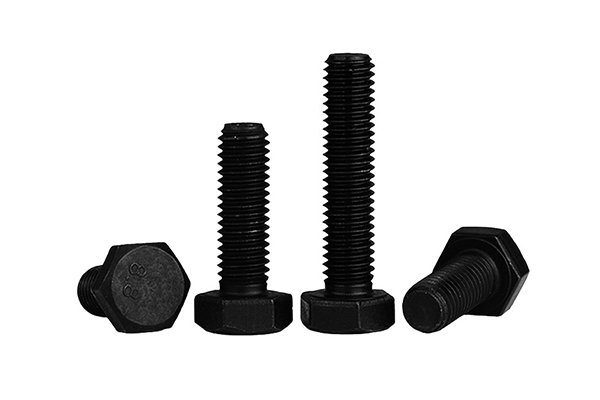
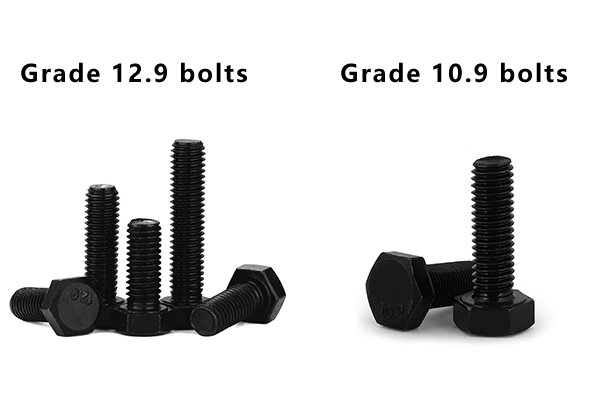
Grade 10.9 and Grade 12.9 are high-strength hexagonal bolts made from high-quality alloy structural steel. Grade 10.9 has a tensile strength of ≥1040 MPa and a yield strength of ≥940 MPa, making it suitable for demanding applications involving heavy loads, high pressure and severe vibration, such as core components of construction machinery, wind power equipment, automotive engines and high-speed rail components; Grade 12.9 has a tensile strength of ≥1220 MPa and a yield strength of ≥1100 MPa, making it suitable for applications involving ultra-high loads and high precision, such as aerospace components, precision machine tools and large pressure vessels.
The grade of a hexagon bolt determines its application limits. When selecting a bolt, it is essential to take into account the actual load, vibration conditions and operating environment to avoid either ‘over-specification’ or ‘under-specification’. Only by understanding the performance characteristics and application areas of each grade can one ensure a safe and stable connection and extend the service life of the equipment.