What Is a Fully Threaded Stud?
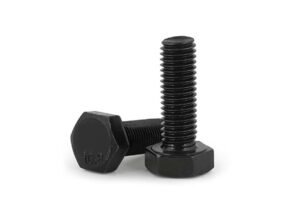
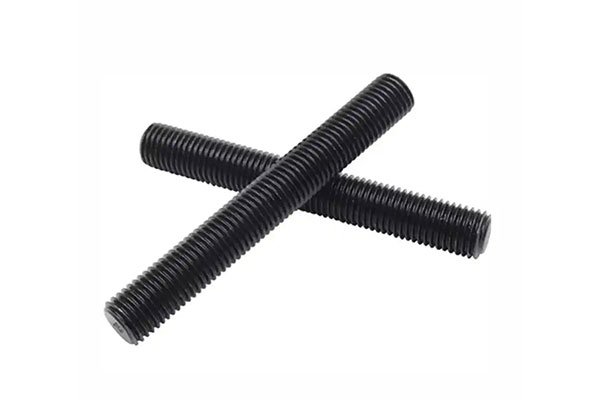
Fully threaded studs (also known in the industry as through-threaded studs or fully threaded studs) are a specialised category of double-ended studs. They are cylindrical fasteners in which the entire shank is devoid of smooth, unthreaded sections and a hexagonal head, and is covered from end to end with continuous external threads. They cannot be tightened on their own; instead, they rely on a nut fitted to each end of the shank to clamp two or more workpieces in the middle, thereby achieving a secure and sealed fastening.
Fully threaded studs are high-strength fasteners specifically designed for industrial applications and serve as core standard components in engineering projects across sectors such as chemicals, power generation, petroleum and heavy machinery. Unlike standard double-ended bolts, which have threads at both ends and a smooth shank in the middle, the defining feature of fully threaded studs is that the entire length of the shank is covered with threads, with no smooth sections whatsoever. This allows nuts to be tightened at any position, with freely adjustable assembly spacing and uniform force distribution without stress concentration. They are perfectly suited to precision high-pressure applications such as flange sealing and pressure vessels, making them industrial fasteners that cannot be replaced by standard bolts.
Advantages of fully threaded studs
High versatility: Studs of the same specification can accommodate flanges of various thicknesses, reducing the number of stock items required;
Even load distribution: The full length of the thread bears the load, making them resistant to thread slippage and breakage under high-pressure conditions, whilst ensuring stable sealing;
Wide adjustment range: Nuts can be tightened at any position along the threaded shaft, offering a high degree of installation tolerance;
Convenient maintenance and disassembly: Nuts at both ends can be removed, simplifying the process of dismantling and reassembling equipment.
The material is the key factor determining the service life and safety of fully threaded studs. High-strength alloy steel, subjected to quenching and tempering heat treatment, offers high tensile strength and is suitable for high-temperature, high-pressure and heavy-load applications in boilers, wind power and hydraulic equipment; the stainless steel range focuses on corrosion resistance, with 316L and 2205 duplex steels capable of withstanding seawater and acidic or alkaline corrosive environments, and widely used in marine vessels and fine chemical processing equipment; specialised cryogenic steel is specifically designed for low-temperature operating conditions such as LNG cryogenic storage tanks.
Genuine fully threaded studs must be manufactured using standardised, precision processes, covering the entire production cycle from precision cutting of raw materials, quenching and tempering heat treatment, precision thread rolling, anti-corrosion treatment, magnetic particle inspection, to sorting and packaging. Among these, heat treatment enhances the product’s toughness and load-bearing capacity; magnetic particle inspection detects internal cracks; and precision thread rolling ensures thread accuracy, effectively preventing safety hazards such as thread slippage, breakage and medium leakage under high-pressure conditions.
Applications of fully threaded studs
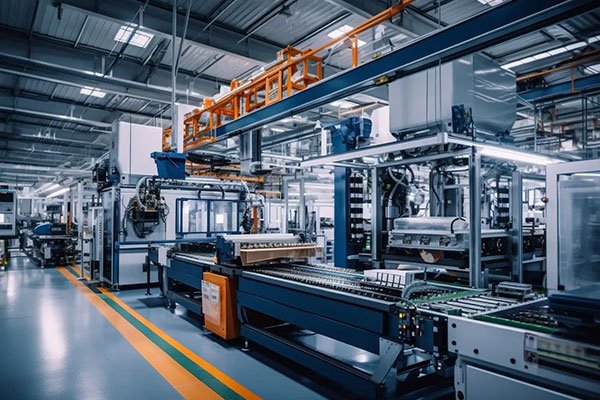


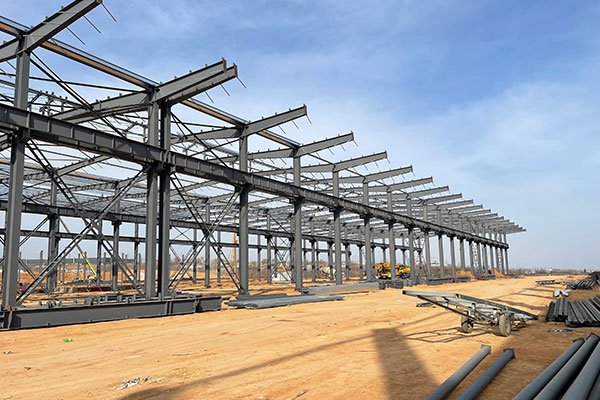
Fully threaded studs are used across the entire industrial sector; in addition to the chemical, power and oil and gas high-pressure pipeline industries, they are also widely employed in mechanical equipment, shipbuilding and offshore engineering, and the pre-embedding of steel structures in construction. As a manufacturer, we offer both standard off-the-shelf products and non-standard customisations, such as extra-long and fine-threaded studs. We provide one-stop, complete sets comprising studs, nuts and washers, accompanied by full certificates of conformity and test reports, and we support invoicing and on-site spot checks.
For purchasers, product selection must be tailored to the specific operating conditions. In high-pressure sealing applications, it is strictly prohibited to substitute standard double-ended bolts. For corrosive or high-temperature environments, appropriate materials and anti-corrosion treatments must be selected. One must not be tempted by low prices to purchase substandard products that have not undergone heat treatment. This will effectively prevent the need for rework and mitigate safety hazards, ensuring the stable completion of projects.